News | Posted November 2, 2026
Putting people at the heart of planning: reflections from our AGM
Planning Aid Scotland’s Annual General Meeting explored the connections between planning, public health and community wellbeing, with a focus on building trust and strengthening public participation
The relationship between planning, public health and the wellbeing of communities was at the centre of Planning Aid Scotland’s Annual General Meeting on 28 October, as the organisation reflected on a year of supporting people across Scotland to shape the places where they live.
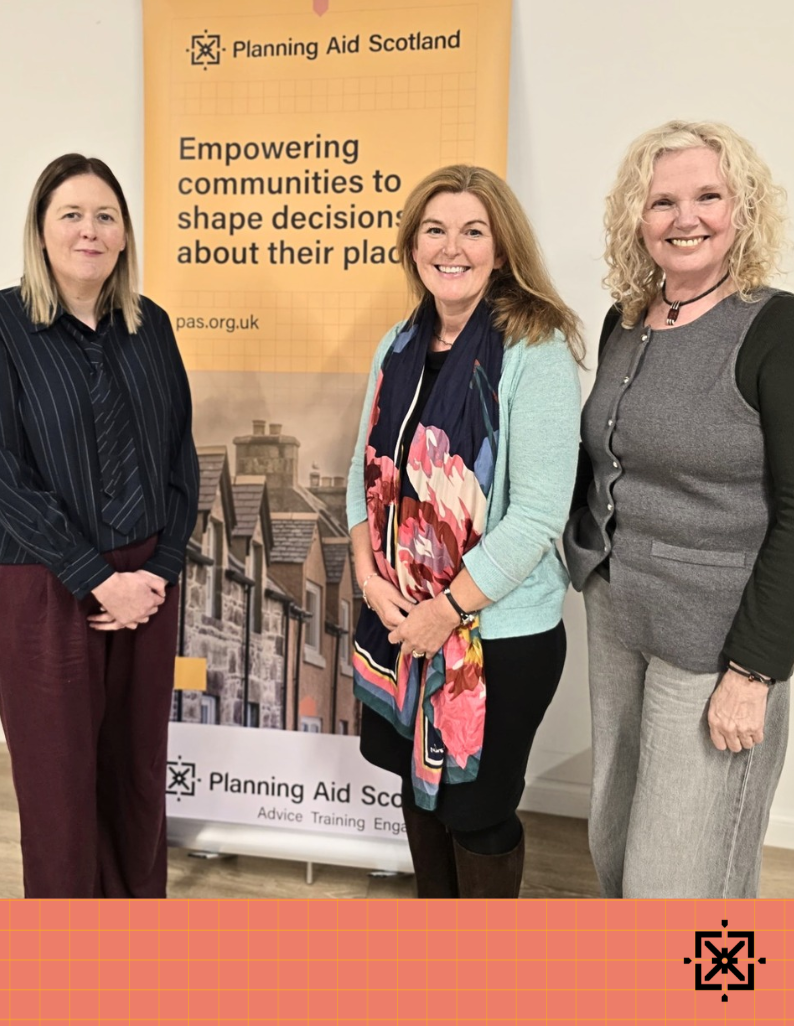
The event brought together Board Directors, staff and supporters to discuss the importance of community involvement in planning, celebrate the organisation’s achievements and welcome former MSP and town planner Sarah Boyack as our new Patron.
Sarah Boyack welcomed as new Patron
Sarah Boyack reflected on the beginnings of her career in planning, including her time at Heriot-Watt University and her experience working as a planner in London and Stirling.
Her connection to the Planning Aid movement goes back to her early career, when she volunteered with Planning Aid for London. She later taught planning at Heriot-Watt University before embarking on a parliamentary career spanning more than two decades.
Sarah spoke about her longstanding interest in planning and the difference it can make to people’s lives. She also recognised Planning Aid Scotland’s contribution to helping communities understand the planning system and take part in decisions affecting their local areas.
Reflecting on the organisation’s achievements in supporting members of the public and communities, she highlighted the Advice Service’s 98% satisfaction rate, describing it as “feedback to be proud of”.
Planning, public health and what people need from their places
Guest speaker Irene Beautyman FRTPI, a former Chair and volunteer of Planning Aid Scotland, offered a personal perspective on the organisation’s work.
During a year-long career break, Irene volunteered with the charity, an experience she recalled as an important influence on her decision to return to planning. It gave her a clearer understanding of the difference planning advice and support could make to people and communities.
She encouraged those attending to consider a fundamental question: how can planners better understand what people need from the places where they live?
Drawing on her experience working with the Improvement Service and Public Health Scotland, Irene discussed the relationship between planning and public health. Although the two professions share many ambitions, she noted that they have not always spoken the same language.
She reflected on efforts to bring planning and public health professionals together, including work that began in 2019 and the subsequent Shaping Places for Wellbeing programme. The programme sought to strengthen the consideration of health and wellbeing in decisions about places and services.
Irene described planners as “coordinators of place”, with a role in bringing together different professions, organisations and community interests.
She also questioned how planning is communicated to the public. People are generally interested in what a development or decision will mean for their neighbourhood, family or daily life, rather than the technical workings of the planning system.
Her message was that planning conversations should spend less time on process and more time on the outcomes people want for their communities.
Irene also discussed public service reform and the importance of making sure decisions about services and places reflect people’s needs.
She praised Planning Aid Scotland’s longstanding focus on involving people in planning, particularly communities whose voices have traditionally been underrepresented.
A year of advice, training and community support
Planning Aid Scotland Chief Executive Cherie Morgan reflected on her first nine months in post and the commitment of the charity’s staff and volunteers during a challenging but exciting year for the sector.
The organisation worked in every Scottish local authority area and with both National Parks during 2025/26, supporting people through planning advice, training and community-led projects.
The AGM also marked the adoption of a new organisational strategy and the establishment of the Planning Aid National Network (PANN), bringing together Planning Aid organisations from across the UK to share knowledge and strengthen collaboration.
Treasurer Robbie Young presented an overview of the organisation’s finances, against a backdrop of continuing financial pressures across the charity sector.
The meeting also recognised changes within the organisation.
Building trust with communities
The importance of trust and meaningful relationships was a recurring theme throughout the AGM, particularly as Local Development Plans are being prepared across Scotland.
Irene Beautyman spoke about the value of working with communities through people and organisations they already know and trust, and the need to reach those who may not normally take part in planning discussions.
She encouraged Planning Aid Scotland to build on its experience of community engagement and consider how more people could be involved in decisions affecting their areas.
The discussion also raised a broader question for the planning profession: how can communities see that their contributions have been listened to and taken into account?
For people to have confidence in planning, they need opportunities to express their priorities, understand the decisions being made and see how their views have informed the process.
Looking ahead
Looking ahead to 2026/27, Cherie outlined Planning Aid Scotland’s three strategic priorities: Inclusive Participation, Community-led Planning, and Learning and Innovation, with the climate emergency remaining a consideration across our work.
She also spoke about the importance of developing partnerships beyond the planning profession, including with organisations working in children’s rights, health, housing and community wellbeing.
This echoed the wider discussions at the AGM about the role planning plays in everyday life, and the need to understand people’s experiences when making decisions about places.
Planning Aid Scotland thanks everyone who attended the AGM, along with our staff, Board, volunteers, funders and partners for their continued support, including the Scottish Government for our core grant funding.